
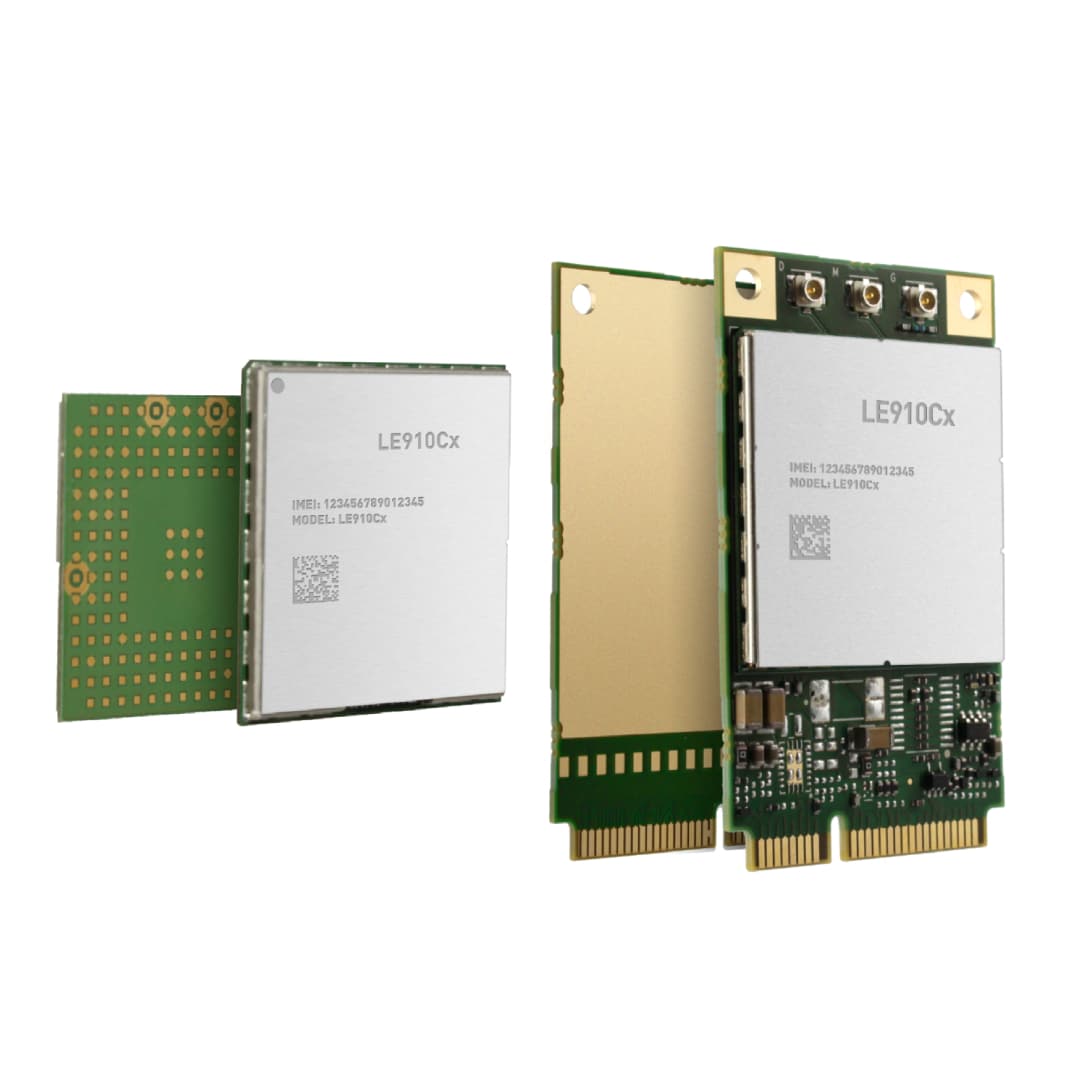
A water meter, a cow collar, and a pallet tracker walk into a design review. All three need a radio that sips power and sends small packets. All three are told they need “LPWAN.” Then the team discovers LPWAN is three different families that behave nothing alike, and the meeting doubles in length.
This guide is that meeting, in writing. It compares NB-IoT, LTE-M, and LoRaWAN on the axes that actually decide a product: who runs the network, whether the device moves, how much data it sends, and what the bill looks like in year five.
The family tree in one paragraph
NB-IoT and LTE-M are cellular technologies. They run on licensed spectrum, need a SIM, and you rent the network from a mobile operator. LoRaWAN runs on unlicensed sub-GHz spectrum, uses gateways you deploy yourself, and has no SIM and no monthly subscription. That one difference drives most of the decision.
The comparison
| NB-IoT | LTE-M | LoRaWAN | |
|---|---|---|---|
| Network type | Licensed cellular | Licensed cellular | Unlicensed, your gateways |
| Spectrum | LTE in-band / guard-band | LTE | Sub-GHz ISM bands |
| Typical downlink | ~20-60 kbps | ~300 kbps, up to 1 Mbps | ~0.3-50 kbps by spreading factor |
| Mobility | Limited | Full handover support | Limited |
| Voice | No | Yes, VoLTE | No |
| Network control | Operator decides | Operator decides | You own the coverage |
| Battery | Years with PSM/eDRX | Years with PSM/eDRX | Years, longest in ideal conditions |
| Module cost | Low to mid | Mid | Lowest |
| Subscription | SIM plan required | SIM plan required | None |
| Best fit | Meters, static sensors, utilities | Trackers, wearables, OTA-heavy devices | Farms, buildings, private networks, areas without cellular |
The first question: who runs the network?
This is the fork in the road, and most teams skip it. If your device lives on sites you control, or inside a building you can wire with gateways, LoRaWAN removes the operator from your business model. No SIM inventory, no roaming contracts, no per-device data plan that a customer has to renew in 2030. The module is cheaper too.
If your device ships anywhere, to customers you have never met, in countries where you will never deploy a gateway, then you need cellular. NB-IoT and LTE-M ride on networks that already exist, and your customer gets connectivity by putting a SIM in the device.
We sell both sides of this argument, and the customers who regret a choice almost always regret it here: they picked LoRaWAN for a product that shipped globally, or they picked cellular for a product that never left their own warehouse site.
Is the device moving?
LTE-M wins this one outright. It supports cell handover, so a tracker on a truck or a wearable on a courier stays connected across the city. NB-IoT and LoRaWAN are built for devices that stay put; they can register on a new cell, but moving at speed is not what they do well.
If your product crosses cell boundaries, stop comparing and take LTE-M. If it sits in a meter box for a decade, NB-IoT or LoRaWAN is fine and cheaper.
How much data, really?
All three are low-power by design. The difference is the ceiling. LoRaWAN tops out around 50 kbps and gets slower as range improves, which makes firmware updates painful. NB-IoT handles modest bursts and can push small OTA patches if the operator allows it. LTE-M comfortably carries larger payloads, and it is the only one of the three that supports voice.
So the honest question is not “which is low power.” It is “what will this device need in year three.” A meter that reports once a day is happy on any of them. A tracker that pushes frequent location updates, or a device that needs remote firmware updates without a site visit, will thank you for LTE-M.
The regional reality check
Coverage maps decide more products than datasheets do. North America leaned into LTE-M early, so US and Canadian carriers are more likely to offer LTE-M than NB-IoT. Europe and much of Asia rolled out NB-IoT broadly, and it is the default cellular LPWAN in many utility projects. LoRaWAN does not care about carriers at all, but it does care about frequency plans: EU868, US915, AS923, and the rest are not interchangeable, and your module must match the region.
Before you commit, name your first three markets and check what is actually available there. That takes an afternoon and it prevents a very expensive surprise at certification.
Why 2026 is the year to decide
The market is moving while you read this. Research and Markets puts the LTE IoT market at roughly $1.6 billion in 2025 and projects about $9.5 billion by 2032, a growth rate in the high twenties percent annually. The 2G and 3G sunsets are pushing the last holdouts into LPWAN and Cat-1 bis now, and operators are consolidating their low-power roadmaps around NB-IoT and LTE-M. Wi-Fi HaLow for long-range IoT
The practical consequence: module lines are maturing, prices are falling, and the parts you design in this year will likely still be in production in 2030. That is a good moment to choose deliberately, not to inherit a radio from a previous project.
What to ask your module supplier
- Which bands does the module cover, and do they match the carriers in your first three markets?
- Does the NB-IoT module also support LTE-M, or is it single-mode? Dual-mode parts simplify one hardware design.
- For LoRaWAN, which frequency plan does the module support: EU868, US915, AS923, or multi-region?
- What certifications ship with the module, and what is still missing for your target regions?
- How long does the vendor commit to keep the module in production? LPWAN lifecycles run long and so should the supply.
- What is the price at your real volume, and what does the lead time look like today?
A supplier that answers those from stock, with the bands and certifications listed per region, is doing the job the datasheet cannot.
The short version
LoRaWAN is the choice when you control the site and want to own the network. LTE-M is the choice when the device moves, needs voice, or ships globally on cellular. NB-IoT is the cost-effective default for static sensors and meters where an operator already covers the ground. All three run for years on battery when the duty cycle is right, so do not choose on battery alone.
Send us the module lines on your BOM, or just tell us what the device does and where it ships. We carry NB-IoT, LTE-M, and LoRaWAN parts from SIMCOM, Quectel, and u-blox, and we will point you to the one that fits before we take an order.
Sources
- Research and Markets, “LTE IoT – Global Strategic Business Report” (https://www.researchandmarkets.com/reports/5302606/lte-iot-global-strategic-business-report)
- LoRa Alliance, official specifications and regional frequency plans (https://lora-alliance.org/)
- Telenor IoT, “2G/3G shutdown white paper” (https://iot.telenor.com/iot-insights/2g-3g-shutdown-white-paper/)