
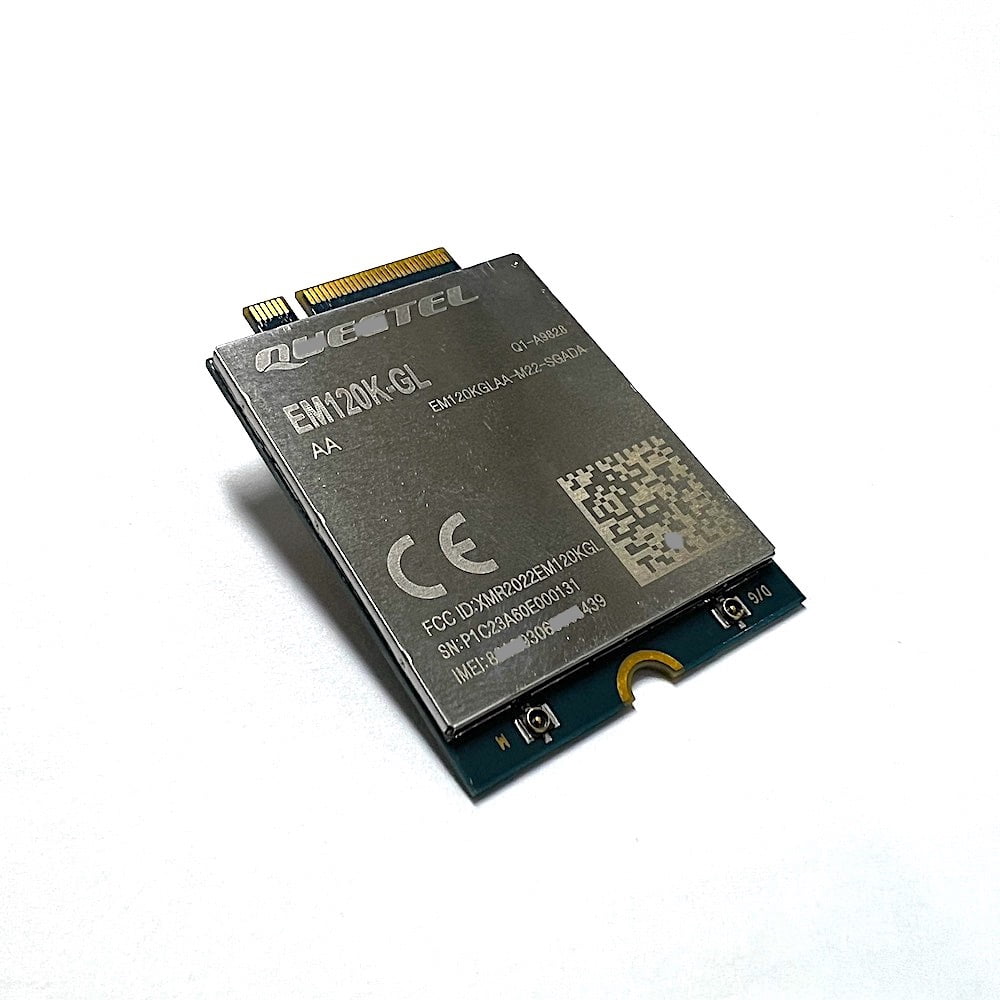
The camera on the far end of the warehouse has no signal. The sensor row in the parking basement the same. Your first instinct is a cellular module and a SIM, and that works, but you pay for wide-area connectivity you do not really need inside one site. The other instinct is more Wi-Fi, except 2.4 GHz does not travel through a concrete floor the way the brochure promised.
Wi-Fi HaLow exists for that gap. It is the IEEE 802.11ah amendment, Wi-Fi that runs below 1 GHz instead of 2.4 or 5 GHz. It keeps the IP stack and the management model of ordinary Wi-Fi, then trades raw speed for range and wall penetration. The result is a radio that covers a building, a campus or a warehouse with one access point, and talks to the internet the way any Wi-Fi device already does.
The timing matters. In August 2026 Quectel put its FGH200M HaLow module into mass production with FCC, IC, CE and RCM certification in hand, and Morse Micro, the chip vendor behind most HaLow hardware, announced its own high-power MM8108-M20 module with 28.5 dBm transmit power. HaLow stopped being a standard waiting for parts. It is now a procurement line.
What HaLow actually is
802.11ah was designed from the start for IoT. It runs in license-free spectrum around 850 to 950 MHz, depending on the region, which is the same physics LoRa uses: lower frequency, longer reach, better behavior indoors.
The numbers that matter:
- Data rate from 150 kbps up to 8.7 Mbps depending on channel width and modulation, so it carries video frames, not just sensor readings
- Outdoor range beyond 1 km in line of sight, and floors of a building in practice
- One access point handles thousands of devices; the current Quectel FGH200M firmware supports up to 8,191
- Native TCP/IP end to end, no gateway, no protocol translation, no packet brokers
That last point is the quiet difference. LoRa devices speak LoRaWAN, and every byte has to cross a network server, an application server and a vendor SDK before your dashboard sees it. A HaLow device is just a Wi-Fi client with a longer arm. Your existing backend, your existing MQTT broker, your existing camera NVR, all see it as normal network traffic.
The 2026 hardware reality
Three pieces of news in the last months turned HaLow from evaluation kits into orders.
Quectel FGH200M: built on the Morse Micro MM8108 SoC, certified FCC, IC, CE and RCM, and in mass production as of August 2026. It is the module to design in when you want a name-brand part with global certification and a real supply chain. Earlier in the year Quectel announced the module handles up to 8,191 connected devices, which covers a dense sensor deployment, not just a handful of test units.
Morse Micro MM8108-M20: the high-power version of the same radio, announced mid-2026 with 28.5 dBm transmit power. That is roughly a four-fold power increase in watts compared with the standard module, and it targets exactly the use cases that need reach: security cameras, access points, gateways. If your device sits outdoors and far from the AP, this is the part to ask for.
Access points and gateways went real too. The HaLowLink 2 access point, announced in January 2026, claims a 1 km range and support for 1,000 end devices, which means you can buy the network side off the shelf instead of building a gateway from scratch.
The ecosystem is still small compared with cellular. You can count the serious module vendors on one hand, and most of them sit on Morse Micro silicon. That is a risk to price in, but it is also a sign of a young, focused market rather than a fragmented one.
HaLow vs LoRa vs NB-IoT
All three solve “my device is far from the router”, but they solve it differently, and the choice changes your product.
| Wi-Fi HaLow | LoRaWAN | NB-IoT | |
|---|---|---|---|
| Spectrum | Sub-GHz (850-950 MHz) | Sub-GHz (863-928 MHz) | Licensed cellular |
| Data rate | 150 kbps – 8.7 Mbps | 0.3 – 50 kbps | 20 – 250 kbps |
| Range | 1 km+ per AP | 2-15 km rural | 1-10 km per cell |
| Network model | Native IP, direct | Gateway + network server | Operator network, SIM |
| Battery | Weeks to months | Years | Years |
| Bandwidth cost | None | None | Per SIM, per operator |
| Best for | Video, dense indoor, campus | Sensor fields, long battery | Wide-area assets, regulated |
Pick HaLow when the traffic is heavier than a sensor reading. A security camera at 500 kbps is realistic HaLow territory and impossible on LoRa. Pick LoRaWAN when the device must run for three years on two AA cells in a field with no power nearby. Pick NB-IoT when the device moves across regions or must live on a cellular carrier’s network with roaming, coverage guarantees and regulatory accountability.
Our LPWAN guide goes deep on the NB-IoT versus LTE-M side; the short version is that HaLow competes with LoRa for site-level coverage, and complements cellular rather than replacing it.
Where HaLow wins, and where it does not
Wins. Inside one site with walls, floors and distance, HaLow beats both alternatives on bandwidth and simplicity. Security cameras inside a factory, AGVs that need reliable low-latency control on a warehouse floor, sensors in a multistory building, retail back-of-store monitoring, campus networks that avoid trenching cable. The IP-native model means the IT department can manage it with existing tools.
Does not win. Wide-area tracking across cities, devices that move between countries, anything that needs a carrier SLA, and anything that must sleep for years on a coin cell. LoRa and NB-IoT keep those jobs, and cellular keeps the mobile ones.
The honest way to read it: HaLow is a site-area network technology. Cellular is a wide-area technology. They are not substitutes for each other, which is why the smartest designs mix them.
Mixing HaLow with cellular
A common 2026 architecture: HaLow covers the site, a 4G or 5G module provides the uplink, and a gateway bridges the two. The cameras and sensors talk HaLow to the gateway; the gateway holds one SIM and carries the whole site’s traffic on a cellular backhaul. You keep per-device SIM costs out of the equation and still get remote access anywhere in the world.
For mobile equipment, the mix flips. A forklift or a field service device carries its own cellular module for location and wide-area data, while the site’s HaLow network handles high-speed local offload when the vehicle is near the dock. Products that ship with a cellular module keep the option of a HaLow companion radio when the deployment is fixed-location.
This is the pattern we see in procurement requests right now: one part number for the moving device, one for the fixed site, one gateway, one SIM budget per site instead of per device.
What to check before you design one in
- Which SoC is inside? Most modules use the Morse Micro MM8108 family, which is good for ecosystem compatibility and firmware reuse. Ask explicitly; a few modules use older chips with fewer features.
- What interfaces? The FGH200M family offers SDIO and other host interfaces. Match the module interface to your host processor before you commit a board.
- Which power class? Standard modules for battery devices, the MM8108-M20 style high-power part for cameras and access points. Do not put a 28.5 dBm radio in a battery product and wonder why the cell is flat.
- Certification status: FCC, IC, CE and RCM on the module saves you months of regional testing. Ask for the certification documents, not the datasheet.
- The network side: which access point or gateway, how many devices it supports, and whether the vendor’s AP firmware matches your module vendor. HaLowLink 2 is the reference point for 1,000-device sites.
- Availability: this market is young. Confirm stock and lead time on the module, the AP and the antenna before you design around a single vendor.
The short version
HaLow makes Wi-Fi cover a site, not just a room. For cameras, dense sensors and anything that needs real bandwidth across a building or campus, it beats LoRa on throughput and beats cellular on per-device cost. It is not a wide-area or a ten-year-battery technology, and it should not be sold as one. The 2026 story is simple: certified modules are shipping, access points are off the shelf, and the radio finally has the supply chain to be a design decision instead of a research project.
If you are evaluating HaLow for a project, send us the module line or the full BOM. We track Quectel FGH200M and the Morse Micro ecosystem alongside our cellular modules and antennas, and we will tell you what ships today, what the lead times look like, and whether a HaLow-plus-cellular mix beats a pure cellular design for your numbers.
Sources
- Quectel, “Quectel introduces FGH200M Wi-Fi HaLow module for massive IoT deployments” (https://www.quectel.com/news-and-pr/fgh200m-wi-fi-halow-module-massive-iot-mwc26/)
- Wireless Design Online, “Quectel’s FGH200M Wi-Fi HaLow Module, Built On Morse Micro’s MM8108, Now FCC/IC/CE/RCM Certified For Mass Production” (https://www.wirelessdesignonline.com/doc/quectel-s-fgh-m-wi-fi-halow-module-built-morse-micro-s-mm-now-fcc-ic-ce-rcm-certified-mass-production-0001)
- Everything RF, “Quectel’s Wi-Fi HaLow Module Achieves Global Certification, Accelerating IoT Product Deployment” (https://www.everythingrf.com/News/details/22442-quectel-s-wi-fi-halow-module-achieves-global-certification-accelerating-iot-product-deployment)
- CNX Software, “Upgraded FGH200M Wi-Fi HaLow module features Morse Micro MM8108 SoC, handles up to 8,191 IoT devices” (https://www.cnx-software.com/2026/03/04/upgraded-fgh200m-wi-fi-halow-module-features-morse-micro-mm8108-soc-handles-up-to-8191-iot-devices/)
- Morse Micro, “Morse Micro Announces MM8108-M20 High-Power Wi-Fi HaLow Module” (https://www.everythingrf.com/News/details/22144-morse-micro-announces-new-high-power-wi-fi-halow-module-to-accelerate-long-range-iot-adoption)
- CNX Software, “Morse Micro MM8108-M20 high-power Wi-Fi HaLow module delivers up to 28.5 dBm Tx output power” (https://www.cnx-software.com/2026/06/03/morse-micro-mm8108-m20-high-power-wi-fi-halow-module-delivers-up-to-28-5-dbm-tx-output-power/)
- CNX Software, “HaLowLink 2 Wi-Fi HaLow access point and extender offers up to 1 km range, supports up to 1,000 IoT end devices” (https://www.cnx-software.com/2026/01/13/halowlink-2-wi-fi-halow-access-point-and-extender-offers-up-to-1-km-range-supports-up-to-1000-iot-end-devices/)
- Elecrow, “Wi-Fi HaLow Complete Guide: 1km+ IoT Wireless for Makers” (https://www.elecrow.com/blog/wi-fi-halow-complete-guide-2.html)
- Data Alliance, “Wi-Fi HaLow Long-Range Wireless IoT OutPerforms LoRa, NB-IoT” (https://www.data-alliance.net/blog/wi-fi-halow-technology-a-game-changer-for-iot-connectivity)
- Everything RF, “What is Wi-Fi HaLow or 802.11ah?” (https://www.everythingrf.com/community/what-is-802-11ah-or-halow)