
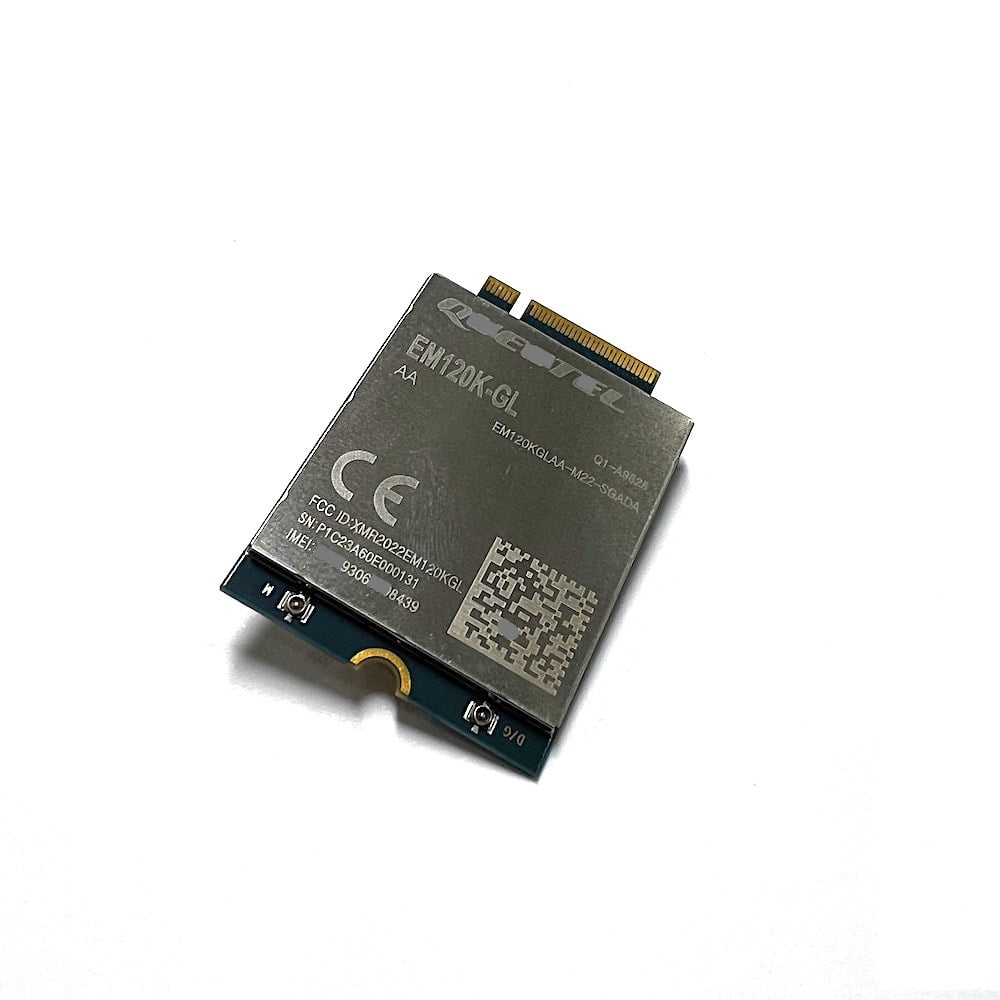
The price conversation changed in 2026. For two years, 5G RedCap modules sat in the $30-50 range: interesting on paper, hard to justify in a BOM. That is ending. By the end of this year, module vendors expect RedCap parts at $15-25, and once the price lands there, the real question stops being “when does RedCap make sense?” and becomes “why am I still paying for a 4G module designed in 2016?”
This article is for the people who actually make that call: embedded engineers, hardware product managers, and the procurement team holding the cost target. It covers what RedCap is, where it genuinely beats LTE Cat-1 bis and Cat-4, and the questions to ask a module supplier before you commit.
What RedCap actually is
RedCap stands for Reduced Capability, a device class introduced in 3GPP Release 17. The idea behind it is simple: full 5G terminals are expensive because they demand wide bandwidth, multiple antennas, and the entire RF stack. Most IoT devices need none of that. RedCap cuts the bandwidth ceiling to 20 MHz, allows a single antenna, simplifies MIMO, and drops the requirement to support the fastest 5G features. 5G for IoT: the basics
The result is a modem with Cat-4-class throughput running on 5G architecture, at a price that keeps falling. eRedCap (Release 18) goes further, trimming the bandwidth cap to 5 MHz for the cheapest, simplest devices.
Network support is the part that does not show up in a datasheet. RedCap only works where the operator has turned it on, and rollout in 2026 is real but uneven. That one fact changes the whole decision, so we will come back to it.
Why this year matters
Two numbers explain the timing. Telecom Review Europe reported in 2026 that RedCap module prices are moving from the $30-50 band to $15-25 by the end of the year, and Omdia expects eRedCap devices to appear in 2027. On top of that, Omdia forecasts 59 billion cellular IoT connections by 2035, which means the modules you design in now will sell into a much bigger market.
The third number is quieter but more strategic. Counterpoint’s shipment data for Q3 2025 showed LTE Cat-1 bis taking close to half of all cellular module shipments. Those Cat-1 bis products are cheap and they work. The risk is that they sit on a 4G-era chipset family that will not receive the same investment as 5G NR as the decade goes on. RedCap is the natural upgrade path, and the price curve is pulling that upgrade forward.
RedCap vs Cat-1 bis vs Cat-4: the honest comparison
| LTE Cat-1 bis | 5G RedCap | eRedCap | LTE Cat-4 | |
|---|---|---|---|---|
| Network generation | 4G LTE | 5G NR (Rel-17) | 5G NR (Rel-18) | 4G LTE |
| Max bandwidth | 20 MHz | 20 MHz | 5 MHz | 20 MHz |
| Typical downlink | ~10 Mbps | ~150 Mbps | ~60 Mbps | ~150 Mbps |
| Antennas | 1 | 1-2 | 1 | 2 |
| Module price trend | Mature, low | $30-50 now, $15-25 by end of 2026 | Expected below RedCap | Mature, similar band to RedCap |
| Power profile | Good for battery | Mains-powered devices first | Lower than RedCap | Higher draw |
| Best fit | Trackers, meters, wearables, 2G/3G replacement | Cameras, gateways, EV chargers, industrial sensors | Wearables, entry sensors | Routers, in-vehicle, video |
The table does not show lifetime, and lifetime is the point. Cat-1 bis is the safe choice for a product shipping next quarter. RedCap is the better bet for a product that will still be manufactured and deployed in 2030, because 5G is where the operators, chip vendors, and certification bodies are spending.
Where RedCap wins, and where it loses
The clearest win is video. RedCap’s roughly 150 Mbps downlink makes it the first cellular option that comfortably carries surveillance cameras and live dashcams without the cost of a full Cat-4 or 5G design. Analysts expect RedCap cameras to be one of the first big verticals for exactly this reason.
Gateways and EV chargers come second. Both need more than Cat-1’s 10 Mbps, both run on mains power so the modem’s power draw is not a blocker, and both benefit from the longer 5G lifetime. Industrial sensors with latency requirements, such as predictive maintenance on factory lines, also fit RedCap better than LPWAN.
Where RedCap loses: anything battery-critical and low-data. If your device sends a few hundred bytes a day and must run five years on two AA cells, NB-IoT or LTE-M is still the right answer, and RedCap will not change that. If you need full 5G speeds, RedCap is not a substitute.
The coverage question nobody wants to discuss
RedCap only works where the network supports it, and in 2026 support is a patchwork. Major operators in North America, Europe, and parts of Asia have deployed or announced RedCap, but the same is not true everywhere, and roaming between carriers is still being worked out.
Before you design RedCap in, check your target markets one by one. Does the carrier list RedCap on its 5G network? Does it work in the bands your product will use? If your product ships worldwide, ask whether the module falls back to LTE cleanly, because you will need that fallback for years.
For a global B2B product in 2026, the honest recommendation is often a hybrid: design with RedCap in mind, pick a module whose LTE fallback is solid, and verify coverage per market before you commit production volumes.
What to ask your module supplier
Buying a RedCap module is not like buying a resistor. The differences between parts are real, and the questions below separate a smooth launch from a six-month delay:
- Is the module RedCap or eRedCap, and which bands does it actually cover?
- Does the vendor publish operator acceptance lists, or only datasheet numbers?
- What certifications ship with the module: CE, FCC, IC, or carrier-specific?
- Is there a pin-compatible eRedCap or Cat-1 bis variant, so you can hedge your design?
- What is the price at your real volume, 1K or 10K, not the headline MOQ price?
- Does the vendor support antenna design, or are you on your own for RF matching?
A distributor that answers these from stock, not from a marketing sheet, is worth more than a 3% price difference. That is the kind of answer we give at Muztech, and it is the reason engineers send us their BOM before they sign anything.
The short version
RedCap is the mid-tier cellular option for 2026-2027: Cat-4-class speed, 5G architecture, and a price curve that finally makes it a real choice. It wins in cameras, gateways, EV charging, and latency-sensitive industrial sensing. It does not replace NB-IoT for battery-critical telemetry, and it only works where your operator says it works.
If your next design ships next quarter, Cat-1 bis is still the low-risk pick. If it needs to live until 2030, RedCap deserves a serious look today.
Send us your BOM, or just the module line. We stock SIMCOM, Quectel, U-blox, Telit, Fibocom, and Sierra parts in 5G, LTE, NB-IoT, and GNSS, and we quote from real stock within one business day.
Sources
- Telecom Review Europe, “5G RedCap to bridge connectivity gaps in mid-tier IoT devices in 2026” (https://www.telecomrevieweurope.com/articles/technology-pick/5g-redcap-to-bridge-connectivity-gaps-in-mid-tier-iot-devices-in-2026/)
- Omdia, “5G RedCap faces adoption challenge while eRedCap shows stronger promise” (https://omdia.tech.informa.com/blogs/2026/july/5g-redcap-faces-adoption-challenge-while-eredcap-shows-stronger-promise)
- Counterpoint Research, cellular module shipment data, Q3 2025 (https://counterpointresearch.com/)
- Omdia via Nasdaq, “Cellular IoT connections to reach 59 billion by 2035” (https://www.nasdaq.com/press-release/omdia-forecasts-cellular-iot-connections-reach-59-billion-2035-2025-12-08)